
Your Cello Has A Buzz
Not every buzz on a cello, viola and violin are a mystery. Sometimes the cause is right there at the top of the fingerboard, hiding in plain sight under your strings, a nut that has worn down so gradually you never noticed it happening. A string vs a piece of ebony, the string will almost always win that battle.
This is one of those repairs that players put off because the symptom seems minor and mostly go away whenever their fingers push the string to the fingerboard with a different note. An annoying buzz, only on certain notes, only on the open strings or in first position. Easy to blame on the strings, the weather, the rosin, your hand positions. But if the buzz is consistent on open strings and disappears when you stop the string even lightly with a finger, the nut is almost certainly the problem. How do you check to see? It’s pretty obvious when you know what to look for.
What the Nut Does
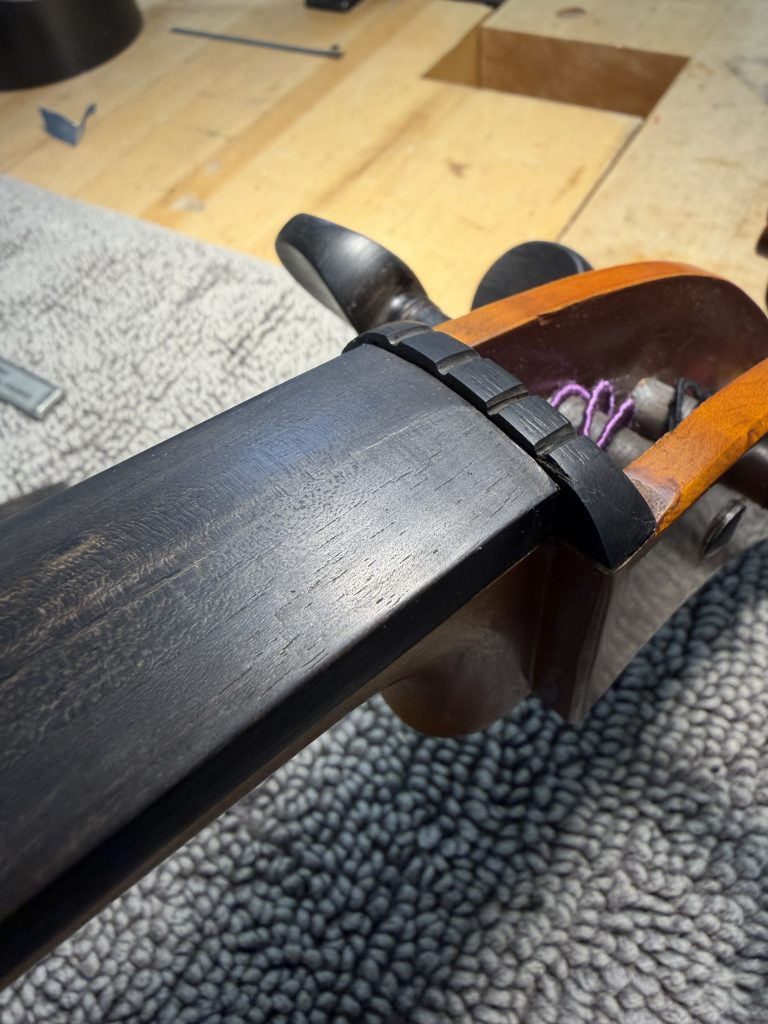
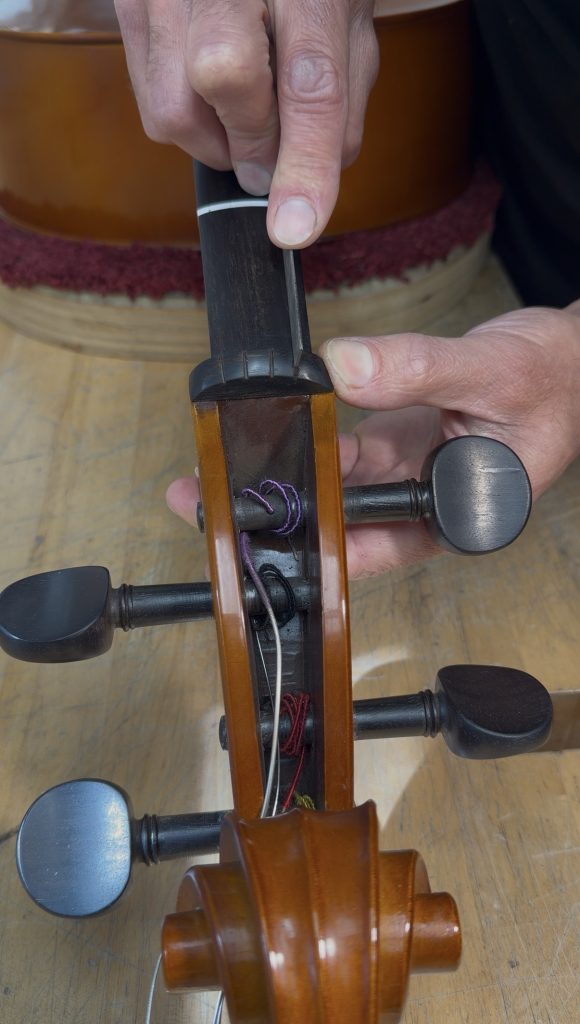
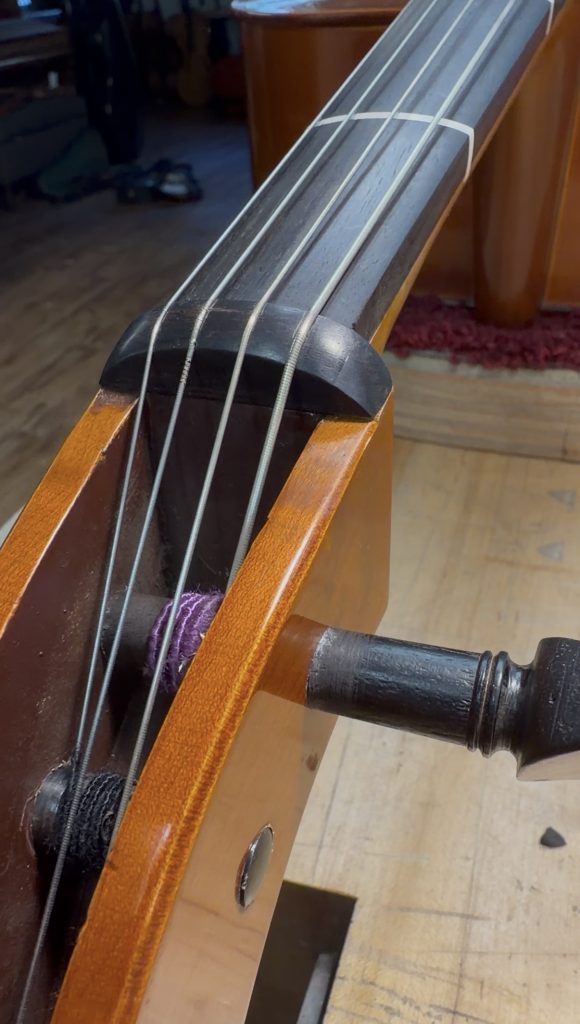
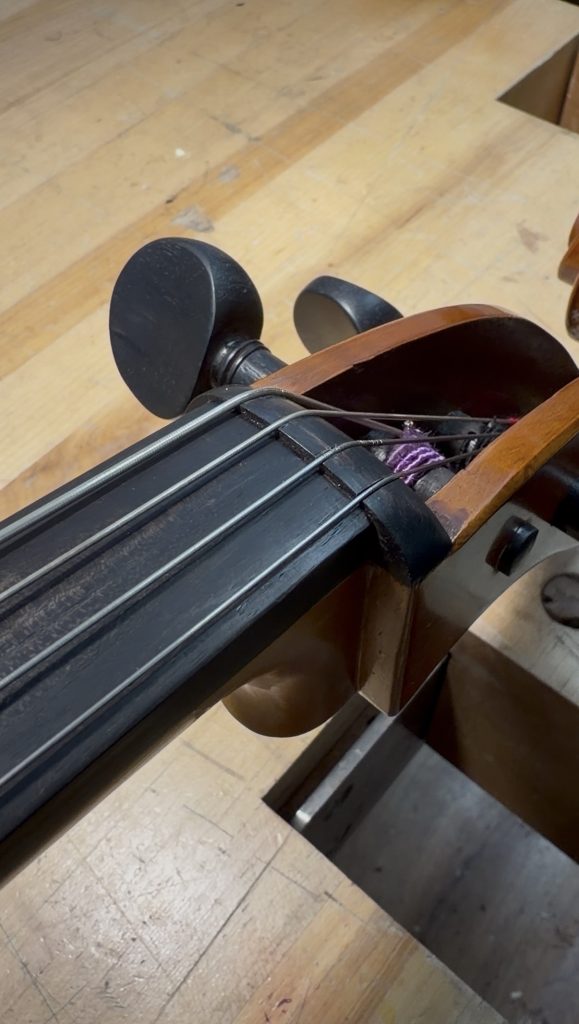
The nut is the small piece of ebony sitting at the top of the fingerboard, slightly higher than the fingerboard where the neck meets the pegbox. It has one job: to hold each string at the correct height above the fingerboard as it travels from the pegs to the playing surface.
That height matters more than most players appreciate, and we are talking fractions of a millimeter in most cases. Too high and the string action in first position becomes stiff and difficult. The left hand works harder than it should just to produce a clean note. Too low and the string barely clears the fingerboard on its path from nut to bridge and most always causes a harsh buzz. When you draw the bow across a string, the vibration travels the full length of the string and if any part of that string is touching wood it shouldn’t be touching, it buzzes against it, and vibrates at that unwanted point of contact.
A nut that is too low is a direct cause of that buzz. And a nut that starts at the right height will, over years of playing, gradually become a nut that is too low, which is normal.
How It Happens
Ebony is hard, but…. modern string windings are harder. Over time, sometimes years, sometimes faster on a heavily played instrument. The string presses into the groove of the nut with every hour of playing. The groove deepens, fractions of a millimeter at a time, until the string is sitting lower than it was when the nut was first installed, even if it was installed at the perfect height.
This is so gradual that players rarely notice it happening. Let’s face it, the player wants to focus on tone and playability, not how everything is the perfect string height so they can play comfortably. The instrument doesn’t suddenly start buzzing one morning. It happens over time and by the time the buzz is noticeable, the nut has usually been low for some time already. Players have the tendency to play around an unwanted buzz.
On a cello the problem is amplified by string gauge and the shear size of the actual instrument along with the tension of the actual string. Cello strings are heavier than violin strings, under greater tension, and they dig into nut material more aggressively over the same period of time. A and D strings, the thinner strings often wear their grooves fastest.
The Repair
On this cello, the A string groove had worn deep enough that the string was making contact with the fingerboard. This particular cello was owned by the same player for over 30 years and she played it as a child. The buzz was clear on the open A and persisted through lower positions where the string angle kept it close to the fingerboard, almost unnoticed.
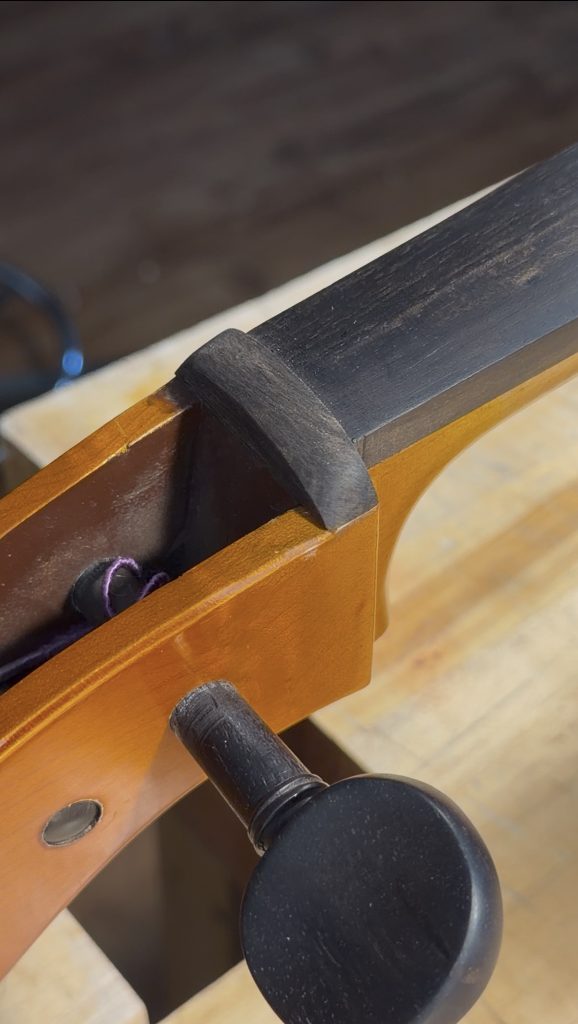
The solution was simple, a new nut, fitted correctly to this instrument out of a fine piece of aged ebony.
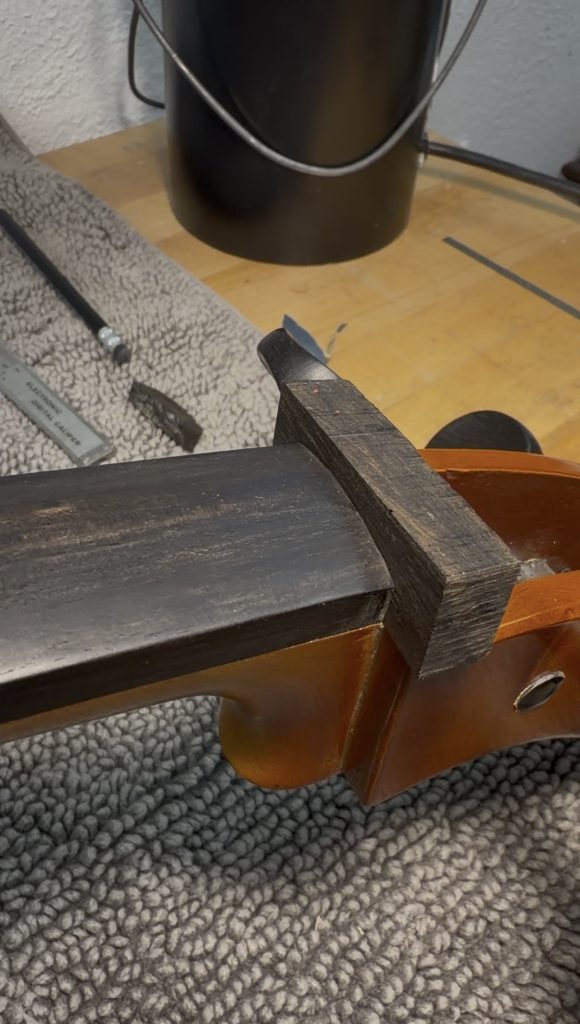
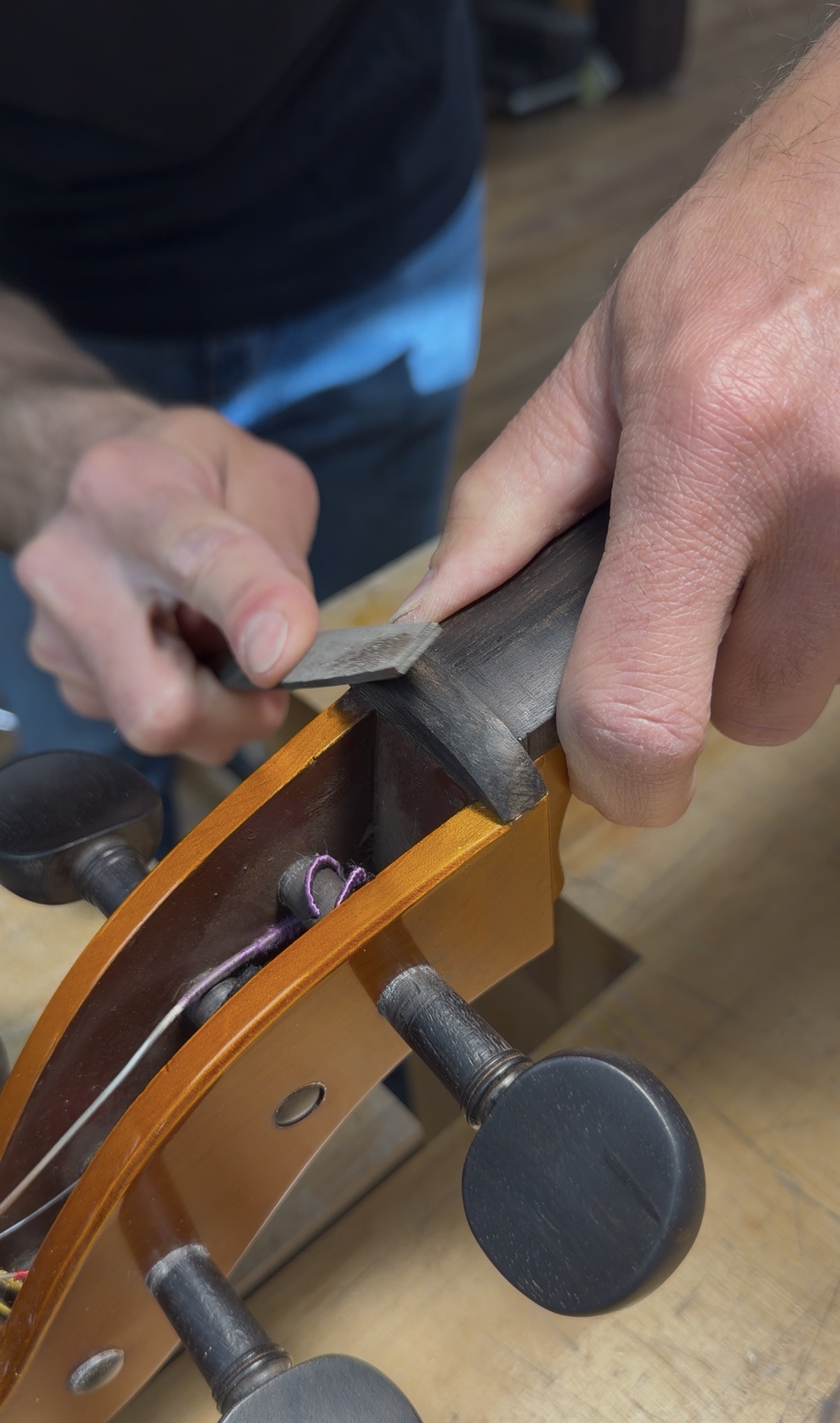
The old nut is carefully removed from its seat at the top of the fingerboard, usually needing some persuasion. The seat, the small ledge where the nut rests at the top of the fingerboard is cleaned and inspected to make sure it’s flat and true. If the seat is uneven, the new nut will never sit correctly no matter how well it’s shaped.
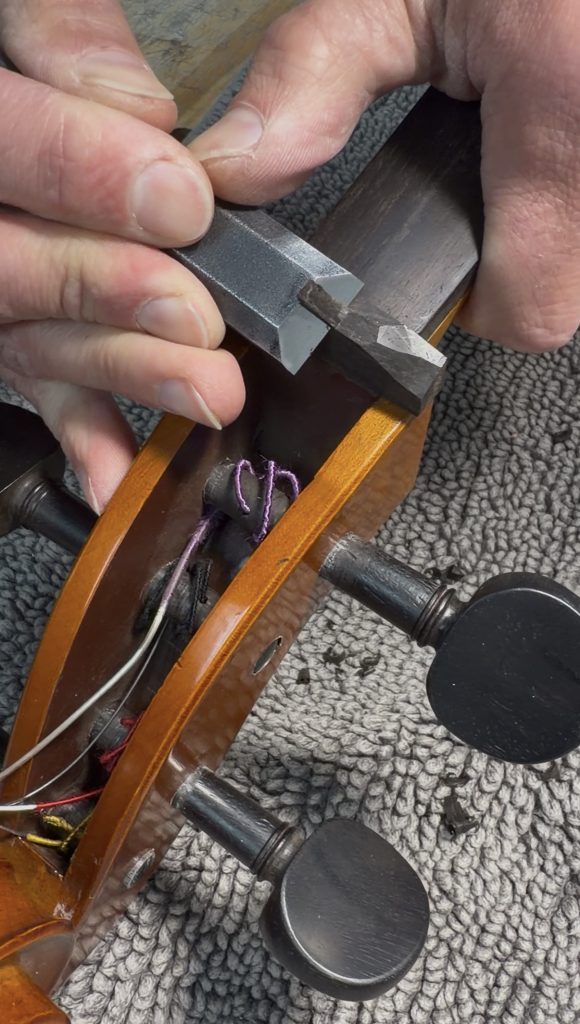
A new piece of ebony is then prepped to be fitted to that seat. The base has to sit flush and stable. We select a piece of material, split the raw material, and plane it 90 degrees to be able to sit properly against the neck and fingerboard. But remember these old cellos there is almost a zero chance that everything is straight and true. The height is established so that when the string grooves are cut, the strings will clear the first position of the fingerboard by the correct margin and has to be enough to eliminate buzzing but not so much that the action becomes difficult to press down, a delicate dance to say the very least. On a cello this is a measured decision, not a guess. String height at the nut affects every note in first position and the transition into higher positions as well. It also isn’t very kind to your fingers trying to push down a nut that is left with too much material.
The grooves are cut one at a time, each matched to the diameter of its string. The angle of each groove matters as well, too shallow and the string sits on top of the nut rather than resting in it, which causes tuning instability. Too steep and the string can bind in the groove, making the instrument difficult to tune and putting sideways stress on the peg. There is also the risk of damaging strings if the nut isn’t properly executed. And we all know how much new strings can be over these last few years. The last thing we want is someone installing a new string on their cello and it snaps.
The top of the nut is shaped and the edges are smoothed so there’s no sharp contact point that could eventually cut into the string winding. Then the strings go back on, the instrument is brought to pitch, and it’s played to test for the buzz.